Anode rods and water quality
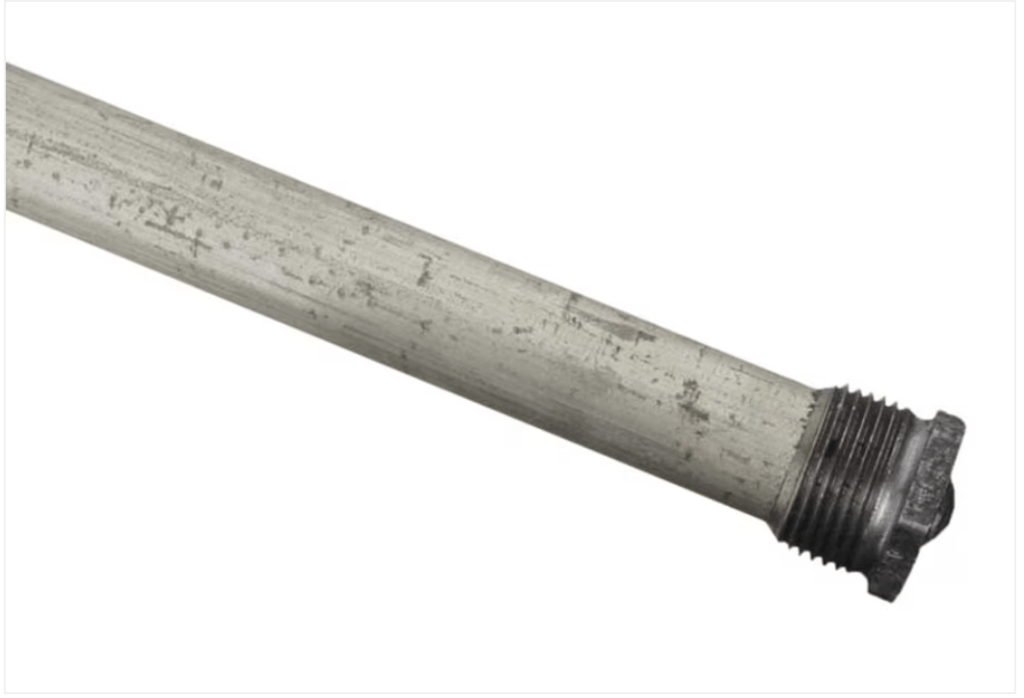
Photo: Rheem.com
Some water, especially well water, in the Malad Valley and elsewhere in Southeast Idaho, has properties that can cause a very unusual occurance: a nasty, rotten-egg sort of smell in the hot water supply. This can be caused in part, and remedied, by a little known component of your water heating system: the anode rod.
The unpleasant odor in your hot water can often be attributed to sulfate-reducing bacteria (SRB), which thrive in anaerobic environments like well systems. These bacteria chemically reduce sulfates to hydrogen sulfide gas, notorious for its rotten egg smell.
Anode rods are pivotal in protecting water heater tanks from corrosion caused by reactive bacteria. In the context of combating the “Smelly Hot Water” problem, the two main types of anode rods – aluminum and electric – offer unique advantages.
- Aluminum Anode Rods
Ideal for addressing odor issues in well systems, aluminum anode rods effectively inhibit the growth of reactive bacteria and reduce hydrogen sulfide concentrations in the water. Their sacrificial nature means that they corrode instead of the tank, providing a cost-effective solution for homeowners dealing with smelly hot water.
Moreover, aluminum anode rods are budget-friendly and widely available, making them a reliable choice for those seeking an economical yet effective solution to the “Smelly Hot Water” conundrum.
- Electric Anode Rods
Also known as impressed current anode rods, electric variants operate differently by utilizing a low-voltage electrical current to prevent corrosion within the water heater tank. While they may have a higher initial cost, electric anode rods boast an extended lifespan and consistent protection against reactive bacteria. Nielsen Plumbing uses the industry-leading Corro-Protec anode rods. The rods themselves have proven effective repeatedly, and come with a 20 year warranty.
For those seeking a low-maintenance solution, electric anode rods are particularly beneficial. Their set-and-forget nature ensures minimal attention is required, offering homeowners a hassle-free approach to eliminating unpleasant smells and maintaining fresh hot water.